.avif)

.avif)
.svg)
VA Appraisal Repairs in Texas: Who Pays and How Repair Costs Affect Home Purchase Negotiations
One of the most common questions Texas veterans ask during the home buying process is simple: Who pays for VA appraisal repairs? The answer depends on the repair type, the purchase agreement, and the negotiation strategy between buyer and seller.
VA appraisal repairs can sometimes become a major factor in a transaction, particularly when a property has safety, structural, or habitability concerns. Understanding how VA appraisal repairs work can help veterans avoid surprises and negotiate from a position of knowledge.
If you are purchasing a home in Texas using a VA loan, knowing who typically pays for repairs and how those costs affect negotiations can help keep your transaction on track.
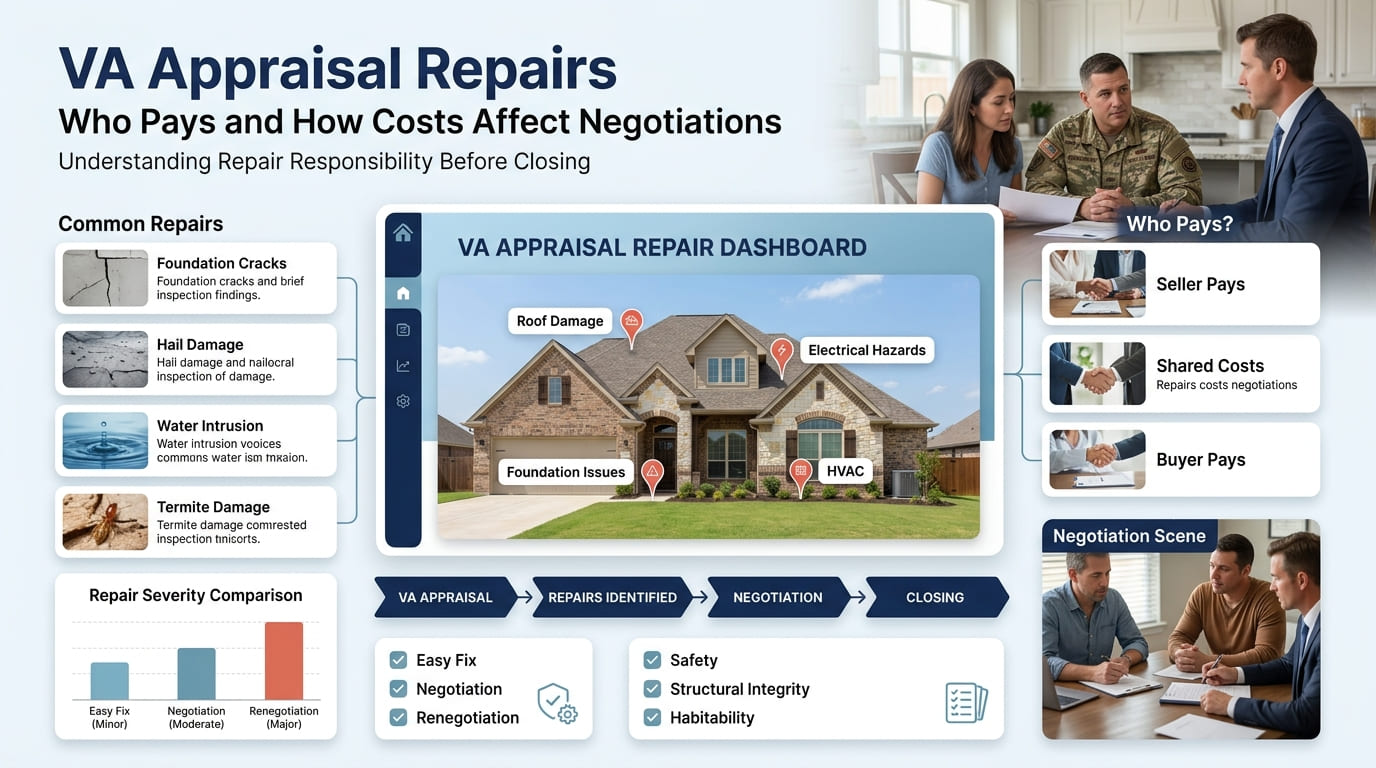
What Are VA Appraisal Repairs?
A VA appraisal serves two primary purposes:
- Establish the property's market value
- Confirm the home meets VA Minimum Property Requirements
When the VA appraiser identifies issues that affect safety, structural integrity, or livability, repairs may be required before the loan can close.
These required corrections are commonly referred to as VA appraisal repairs.
Key Takeaway
VA appraisal repairs are not cosmetic improvements. They are typically issues affecting safety, health, structural soundness, or habitability.
Why Does the VA Require Repairs?
The Department of Veterans Affairs wants to ensure veterans purchase homes that are safe and suitable for occupancy.
The VA appraisal process helps identify concerns that could create financial hardship or safety risks after closing.
Common areas of concern include:
- Roofing issues
- Structural defects
- Electrical hazards
- Plumbing problems
- Heating system failures
- Water intrusion
- Pest related damage
- Safety hazards
When these issues are discovered, repairs may be required before final loan approval.
Common VA Appraisal Repairs in Texas
Certain property issues appear more frequently in Texas due to weather conditions, climate, and housing age.
Roof Damage
Texas hailstorms, wind events, and severe weather often create roofing concerns.
The appraiser may require repairs when:
- Active leaks exist
- Missing shingles expose underlying materials
- Significant roof deterioration is present
Foundation Problems
Texas soil movement can contribute to foundation settlement.
Appraisers often pay close attention to:
- Large foundation cracks
- Structural shifting
- Significant settlement concerns
Electrical Hazards
Common examples include:
- Exposed wiring
- Missing electrical covers
- Unsafe electrical panels
HVAC Issues
Because of Texas heat, a functioning cooling and heating system is important for habitability.
Water Damage
Evidence of active leaks or significant moisture intrusion may require correction before closing.
Who Pays for VA Appraisal Repairs?
One of the biggest misconceptions about VA loans is that the VA automatically pays for required repairs.
The VA does not pay for repairs.
Instead, responsibility is determined through negotiation between buyer and seller.
Typical Repair Responsibility Options
The purchase contract often determines how repair discussions proceed.
Seller Pays for Repairs
In many Texas transactions, sellers agree to complete required repairs before closing.
This is often the simplest solution because:
- The property remains eligible for financing
- Closing timelines remain intact
- Buyer preserves available cash
Buyer Pays for Repairs
Although possible, buyer paid repairs can become complicated.
Lender guidelines, timing restrictions, and ownership issues may limit a buyer's ability to perform repairs before closing.
Buyers should always consult their lender before agreeing to this arrangement.
Shared Repair Costs
In competitive markets, both parties may agree to split repair expenses.
This approach helps preserve the transaction while distributing costs more evenly.
Key Takeaway
When veterans ask who pays for VA appraisal repairs, the most accurate answer is that repair responsibility is negotiable and usually determined during contract negotiations.
How VA Appraisal Repairs Affect Home Purchase Negotiations
Repair requirements often become one of the most important negotiation points during a transaction.
The impact depends largely on:
- Repair cost
- Local market conditions
- Seller motivation
- Property condition
- Buyer demand
Minor Repairs
Small issues typically create minimal disruption.
Examples include:
- Installing handrails
- Replacing damaged outlets
- Correcting minor safety concerns
These repairs are often completed quickly by the seller.
Moderate Repairs
Larger concerns may trigger additional negotiations.
Examples include:
- Roof repairs
- Plumbing repairs
- HVAC corrections
Buyers and sellers may negotiate credits, concessions, or price adjustments.
Major Repairs
Substantial repair requirements can significantly affect negotiations.
Examples include:
- Foundation repairs
- Structural corrections
- Extensive roof replacement
These situations occasionally result in contract renegotiation or transaction cancellation.
Texas Market Conditions and Repair Negotiations
Market conditions play a major role in determining who ultimately pays.
Seller's Market
When inventory is limited and demand is strong:
- Buyers may accept more responsibility
- Sellers have greater negotiating leverage
- Multiple offer situations reduce buyer flexibility
Buyer's Market
When inventory increases:
- Sellers are more likely to complete repairs
- Buyers gain negotiating power
- Repair requests become more successful
Understanding local Texas market conditions helps veterans develop realistic expectations.
Can a Seller Refuse VA Appraisal Repairs?
Yes.
A seller can refuse requested repairs.
However, refusal may create challenges.
Potential outcomes include:
- Renegotiation
- Price adjustments
- Contract termination
- Buyer seeking another property
Because VA financing requires certain conditions to be satisfied, unresolved repair requirements may prevent closing.
What Repairs Are Most Likely to Be Required?
Not every issue becomes a repair condition.
VA appraisers generally focus on:
Key Takeaway
The VA is primarily concerned with safety, structural integrity, and habitability rather than cosmetic appearance.
How Buyers Can Prepare for Potential Repair Issues
Veterans purchasing homes in Texas can reduce surprises by taking proactive steps.
Work With Experienced VA Professionals
Agents and lenders familiar with VA financing often identify potential concerns before offers are submitted.
Review Property Condition Carefully
Pay close attention to:
- Roofing
- Foundation condition
- Electrical systems
- HVAC systems
- Evidence of water damage
Order a Home Inspection
Inspections frequently uncover issues before the VA appraisal occurs.
Early identification creates stronger negotiating opportunities.
Budget for Unexpected Costs
Even when sellers agree to repairs, transactions can involve additional expenses and delays.
Preparation reduces stress during negotiations.
Key Factors That Influence Repair Negotiations
Key Takeaway
Repair negotiations are influenced by much more than the repair itself. Market dynamics and contract structure often determine the final outcome.
Why Understanding VA Appraisal Repairs Matters
Many veterans enter the home buying process assuming required repairs automatically become the seller's responsibility.
In reality, every transaction is different.
The most successful buyers understand:
- Repair requirements early
- Negotiation options available
- Market conditions affecting leverage
- Contract provisions impacting responsibility
This knowledge creates smoother transactions and fewer surprises during closing.
Why I Believe Repair Negotiations Are Often Misunderstood
After helping Texas veterans navigate VA financing, I have seen many buyers become concerned when repair conditions appear during the appraisal process.
The reality is that most repair issues are manageable.
The biggest mistake buyers make is viewing repair requirements as deal killers. In many cases, they simply become another step in the negotiation process.
Strong communication between the buyer, seller, lender, and real estate professionals often resolves concerns efficiently. The goal is not simply to close the transaction. The goal is to ensure the veteran purchases a safe and financially sound property.
When approached strategically, VA appraisal repairs frequently protect buyers from costly problems they may not have discovered until after closing.
— Bill Marshall
Ready to Explore Your VA Loan Options in Texas?
Platinum Capital Advisors helps Texas veterans understand VA loan requirements, appraisal conditions, repair negotiations, and financing options throughout the home buying process.
Whether you are purchasing your first home or moving within Texas, understanding VA appraisal requirements can help you navigate the transaction with confidence.
Frequently Asked Questions
What are VA appraisal repairs?
VA appraisal repairs are property corrections required to satisfy VA Minimum Property Requirements related to safety, habitability, or structural integrity.
Who pays for VA appraisal repairs?
There is no universal rule. Seller paid repairs are common, but buyers and sellers may negotiate responsibility depending on the transaction.
Can a buyer pay for VA appraisal repairs?
In some situations, yes. However, lender guidelines and timing restrictions may affect whether buyer paid repairs are permitted.
Can a seller refuse VA appraisal repairs?
Yes. Sellers can refuse repairs, but doing so may jeopardize the transaction if the property no longer qualifies for VA financing.
Do cosmetic issues require VA appraisal repairs?
Generally no. The VA focuses on safety, structural soundness, and habitability rather than cosmetic appearance.
Check VA Rates Now
Take a first step towards your dream home

Free & non binding
No documents required
No impact on credit score
No hidden costs

.svg)

.svg)

