.avif)

.avif)
.svg)
VA Loan Inspection vs Appraisal in Washington DC: Understanding the Critical Differences Before Closing
Buying a home with a VA loan in Washington DC involves several important steps before closing, and two of the most misunderstood are the VA appraisal and the home inspection. Many buyers assume they serve the same purpose, but they evaluate different aspects of the property. Understanding the difference between a VA loan inspection vs appraisal can help you make informed decisions, avoid unexpected expenses, and move toward closing with confidence.
A VA appraisal is required for every VA home loan to determine the property's market value and ensure it meets the Department of Veterans Affairs' Minimum Property Requirements (MPRs). A home inspection, however, is optional but strongly recommended because it provides a detailed evaluation of the home's overall condition.
Knowing what each process covers can protect both your investment and your long-term financial security.
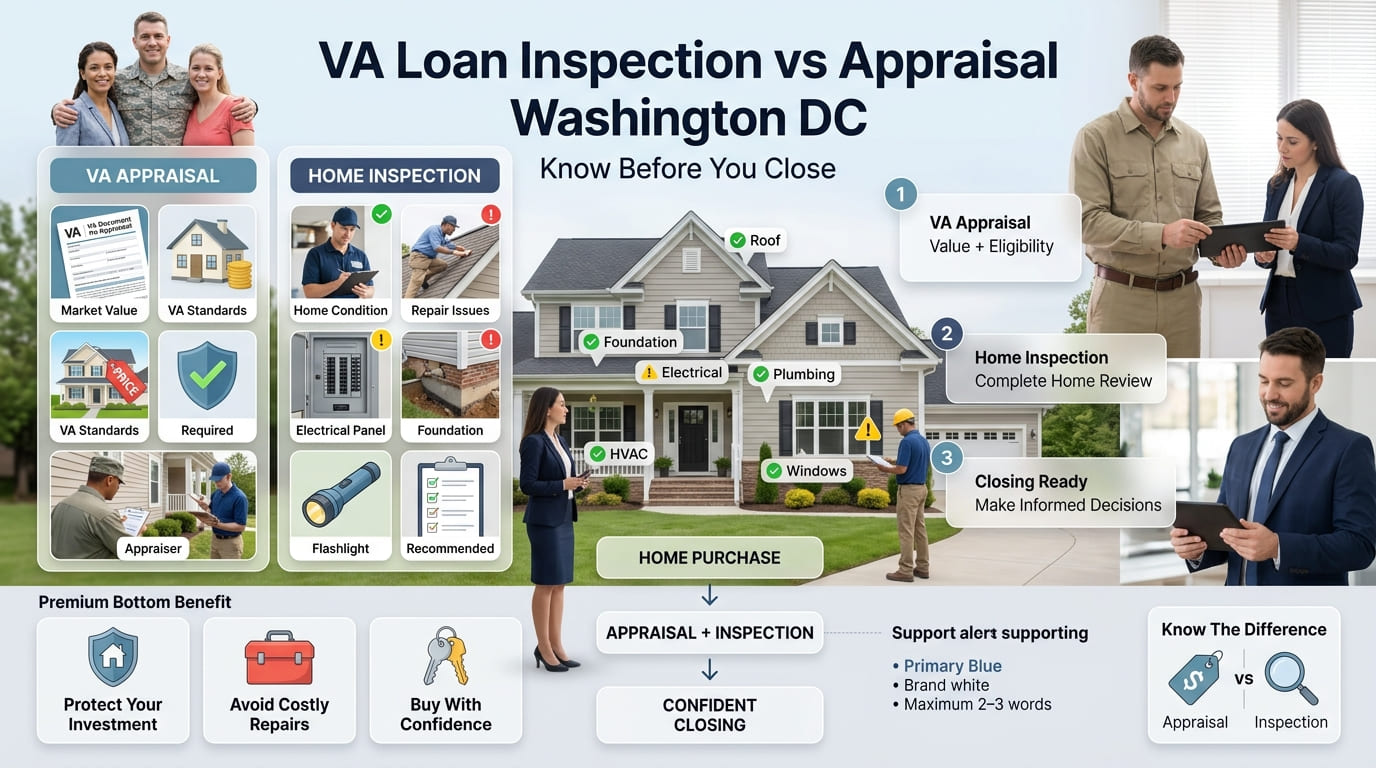
What Is a VA Loan Appraisal?
A VA appraisal is conducted by a VA-approved appraiser to determine whether the home's value supports the loan amount and whether the property meets the VA's Minimum Property Requirements.
The appraisal protects both the borrower and the lender by ensuring the property is safe, structurally sound, and reasonably priced.
A VA appraisal typically evaluates:
- Fair market value
- Structural integrity
- Roof condition
- Heating and cooling systems
- Electrical and plumbing functionality
- Water supply and sanitation
- Safety hazards
- General livability
The appraiser is not performing a complete inspection. Their primary responsibility is determining value while confirming the home meets basic VA property standards.
What Is a Home Inspection?
A home inspection is a comprehensive examination performed by a licensed home inspector hired by the buyer.
Unlike the appraisal, the inspection focuses on identifying existing problems, maintenance issues, and potential future repairs.
An inspection commonly reviews:
- Foundation
- Roof lifespan
- Attic ventilation
- Electrical systems
- Plumbing systems
- HVAC equipment
- Appliances
- Windows and doors
- Insulation
- Moisture intrusion
- Mold concerns
- Pest damage
The inspection report gives buyers a complete understanding of the property's condition before finalizing the purchase.
VA Loan Inspection vs Appraisal: Key Differences
Key Takeaway
A VA appraisal helps determine whether the property qualifies for financing, while a home inspection helps determine whether the home is worth buying.
Why Both Matter in Washington DC
Washington DC offers a diverse housing market with historic row houses, condominiums, newly constructed homes, and older single-family properties. Older homes may contain aging plumbing, outdated electrical systems, foundation settlement, or roof issues that are not always identified during the appraisal process.
A professional inspection provides valuable insight into maintenance costs that could arise after closing.
For buyers purchasing historic properties throughout Washington DC, an inspection becomes even more valuable because older homes often require specialized repairs and ongoing maintenance.
Common VA Minimum Property Requirements
The Department of Veterans Affairs requires homes to meet basic standards before approving financing.
These standards generally include:
- Safe access to the property
- Functional heating system
- Adequate roofing
- Safe electrical systems
- Proper drainage
- Reliable water supply
- Sound structural components
- No significant health or safety hazards
If major issues are discovered during the appraisal, repairs may need to be completed before closing.
Should You Skip the Home Inspection?
Although a home inspection is optional, skipping it may expose buyers to significant financial risk.
Hidden issues can include:
- Roof leaks
- Sewer line problems
- Foundation movement
- Mold
- Water damage
- Electrical hazards
- HVAC failures
Repairing these problems after closing can cost thousands of dollars.
Pro Tip
Schedule your home inspection as early as possible during your contract contingency period. This gives you time to negotiate repairs or request seller concessions before moving toward closing.
What Happens If Problems Are Found?
If the appraisal identifies issues affecting VA property eligibility, the lender may require repairs before approving the loan.
If the inspection uncovers maintenance concerns, buyers typically have several options:
- Request seller repairs
- Negotiate closing credits
- Renegotiate the purchase price
- Proceed with the purchase
- Withdraw from the contract if permitted under inspection contingencies
Understanding these options allows buyers to make informed decisions based on the property's condition.
Why Experienced VA Loan Guidance Matters
The VA home buying process includes unique requirements that differ from conventional financing. Working with a lender experienced in VA loans helps buyers understand appraisal requirements, navigate underwriting, and prepare for a smooth closing.
Merchants Home Lending specializes in helping veterans and active duty military members purchase homes with confidence. The team works closely with borrowers throughout every stage of the loan process, helping explain appraisal requirements, financing options, and closing expectations.
Whether you are buying your first home or relocating to Washington DC, experienced guidance can make the process significantly less stressful.
Key Takeaways
- Understanding VA loan inspection vs appraisal helps buyers avoid costly surprises.
- A VA appraisal determines market value and confirms the property meets VA Minimum Property Requirements.
- A home inspection provides a detailed assessment of the home's physical condition.
- Both evaluations serve different purposes and work together to protect buyers.
- Purchasing a home in Washington DC becomes easier when you understand every step before closing.
Frequently Asked Questions
Is a VA appraisal the same as a home inspection?
No. A VA appraisal determines market value and confirms the property meets VA Minimum Property Requirements, while a home inspection evaluates the home's overall condition.
Is a home inspection required for a VA loan?
No. Although not required by the Department of Veterans Affairs, a professional home inspection is strongly recommended.
Who pays for the VA appraisal?
The buyer typically pays the VA appraisal fee as part of the mortgage closing costs, although costs may vary depending on negotiations.
Can a VA loan be denied after the appraisal?
Yes. If the property does not meet VA Minimum Property Requirements or the appraised value is significantly lower than the purchase price, additional steps may be required before loan approval.
Should I get both a VA appraisal and a home inspection?
Yes. The appraisal protects the lender and confirms property eligibility, while the inspection provides a detailed understanding of the home's condition before closing.
External Resources
For additional information about VA home loans and inspections, visit these trusted resources:
- U.S. Department of Veterans Affairs Home Loans: https://www.va.gov/housing-assistance/home-loans/
- Consumer Financial Protection Bureau Home Buying Guide: https://www.consumerfinance.gov/
- U.S. Department of Housing and Urban Development: https://www.hud.gov/
Check VA Rates Now
Take a first step towards your dream home

Free & non binding
No documents required
No impact on credit score
No hidden costs

.svg)

.svg)

