VA Residual Income Calculator - Check VA Loan Qualification 2024
✓
Qualification Status
You Meet Requirements
Your Residual Income
Calculated Amount
$0
VA Requirement
Minimum Required
$0
Income Calculation Breakdown
Total Gross Monthly Income
$0
Federal Tax
$0
State Tax
$0
FICA / Social Security
$0
Retirement Contributions
$0
Proposed Mortgage (PITI)
$0
Utilities
$0
Maintenance / HOA
$0
Child Care
$0
Job Expenses
$0
Other Monthly Debts
$0
VA Residual Income Requirements Table (2024)
| Family Size |
Northeast |
Midwest |
South |
West |
Note: Requirements shown are for loans $79,999 and below. For loans $80,000 and above, requirements increase by approximately $80-$100 per month depending on region.
Understanding VA Residual Income
What is Residual Income?
Residual income is the amount of money you have left over each month after paying all major expenses, including your proposed mortgage payment, taxes, debts, and basic living costs. Unlike debt-to-income (DTI) ratio, which only looks at debt compared to income, residual income ensures you have enough money left for food, clothing, transportation, and other necessities.
Why Does the VA Use Residual Income?
The VA requires residual income calculations because it's a more comprehensive measure of your ability to afford a mortgage and maintain financial stability. Research has shown that residual income is a better predictor of loan default than DTI ratio alone. This requirement protects both veterans and lenders by ensuring sustainable homeownership.
How is Residual Income Calculated?
The VA uses the following formula:
Residual Income = Gross Monthly Income - (Taxes + Social Security + Mortgage Payment + Utilities + Maintenance + Child Care + Job Expenses + Other Debts)
Regional Variations
The VA recognizes that living costs vary significantly across the United States. That's why residual income requirements are adjusted by geographic region:
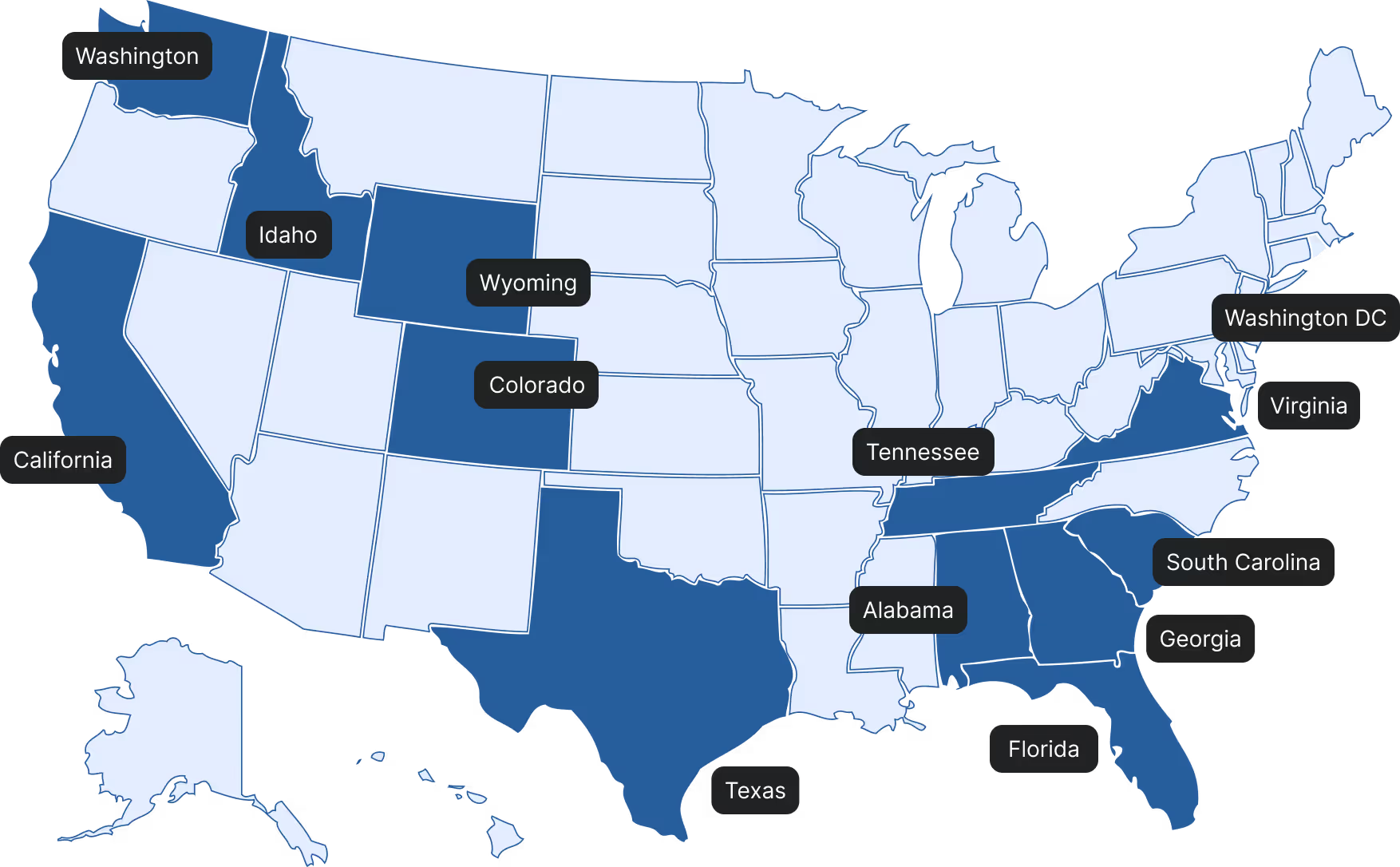
- Northeast: Highest requirements due to higher cost of living (CT, MA, ME, NH, NJ, NY, PA, RI, VT)
- West: Second-highest requirements (AK, AZ, CA, CO, HI, ID, MT, NV, NM, OR, UT, WA, WY)
- Midwest: Moderate requirements (IA, IL, IN, KS, MI, MN, MO, ND, NE, OH, SD, WI)
- South: Lowest requirements, generally the most affordable region (AL, AR, DC, DE, FL, GA, KY, LA, MD, MS, NC, OK, SC, TN, TX, VA, WV)
Loan Amount Thresholds
Residual income requirements increase with loan size. There are typically two tiers:
- Loans $79,999 and below: Base requirements
- Loans $80,000 and above: Requirements increase by $80-$100/month depending on region
What Counts as Income?
- Base salary or hourly wages
- Military allowances (BAH, BAS if applicable)
- Bonuses (if consistently received for 2+ years)
- Commission income (averaged over 2 years)
- Rental income (with 25% subtracted for maintenance)
- Investment income
- Social Security or disability payments
- Alimony or child support (if continuing for 3+ years)
What Counts as Expenses?
- Federal and state income taxes
- FICA (Social Security and Medicare)
- Retirement contributions
- Proposed mortgage payment (PITI)
- HOA or maintenance fees
- Utilities (estimate if not currently a homeowner)
- Child care or daycare costs
- Job-related expenses (uniforms, required travel, etc.)
- Recurring monthly debts (car payments, student loans, credit cards)
Compensating Factors
If you fall slightly short of residual income requirements, lenders may still approve your loan if you have strong compensating factors:
- Excellent credit score (720+)
- Significant cash reserves (6+ months of payments)
- Low DTI ratio (under 31%)
- Minimal increase in housing payment from current rent
- Strong employment history and stable income
- Previous successful homeownership
Tips for Meeting Requirements
- Reduce debt: Pay down credit cards, car loans, or other debts before applying
- Increase income: Consider overtime, bonuses, or additional income sources that can be documented
- Lower housing costs: Choose a less expensive home or make a larger down payment
- Refinance existing debts: Lower monthly payments on cars or student loans
- Accurate utility estimates: Research actual costs for the property you're considering
Common Misconceptions
Myth: Residual income is the same as DTI ratio.
Fact: DTI only compares debt to income. Residual income accounts for all living expenses and ensures you have money left over.
Myth: If I meet DTI requirements, I automatically meet residual income requirements.
Fact: These are separate calculations. You must meet both to qualify for a VA loan.
Myth: Residual income requirements are the same nationwide.
Fact: Requirements vary significantly by region to account for different costs of living.
What is VA Residual Income?
VA residual income is the amount of money left over each month after a borrower pays all major monthly expenses, including their mortgage payment, taxes, insurance, and other debts. The Department of Veterans Affairs uses residual income as a key qualifying factor to ensure Veterans can comfortably afford their home loan without financial strain.
Unlike most conventional loan programs that focus primarily on debt-to-income ratio, the VA home loan program goes a step further by requiring borrowers to meet a minimum residual income threshold before loan approval.
How Does the VA Residual Income Requirement Work?
The VA sets minimum residual income thresholds based on two factors — your family size and the region of the country where you are purchasing. If your monthly leftover income after all obligations falls below the VA's minimum for your situation, your loan application may be denied even if your debt-to-income ratio looks acceptable on paper.
This requirement acts as a safety net, helping ensure that Veterans are not stretched financially thin after taking on a mortgage payment. It is one of the reasons VA loans have historically lower foreclosure rates compared to conventional mortgage products.
What Are the VA Residual Income Requirements by Region?
The VA divides the United States into four geographic regions — Northeast, Midwest, South, and West — and sets different minimum residual income amounts for each. Requirements also increase with family size.
As a general benchmark, a family of four purchasing in the South region typically needs around $1,003 in monthly residual income, while the same family purchasing in the West would need approximately $1,117. Larger families and higher-cost regions carry higher thresholds. Your VA loan specialist can provide the exact figure that applies to your specific situation.
How is VA Residual Income Calculated?
VA residual income is calculated by subtracting your total monthly obligations from your gross monthly income. The expenses factored into this calculation typically include your proposed mortgage payment (principal, interest, taxes, and insurance), monthly debt payments such as car loans, student loans, and credit cards, estimated utility costs based on the home's square footage, and state income taxes.
The amount remaining after all these deductions is your residual income. This figure is then compared against the VA's minimum threshold for your family size and region to determine whether you meet the requirement.
Why Does the VA Use Residual Income Instead of Just DTI?
Most mortgage programs rely heavily on the debt-to-income (DTI) ratio to measure affordability. While the VA also considers DTI as part of the loan qualification process, it treats residual income as an equally important — and sometimes more telling — measure of a borrower's ability to repay.
The reason is simple. A borrower with a high income might have an acceptable DTI ratio but still be left with very little cash for everyday living expenses after making their mortgage payment. Residual income catches situations like this that DTI alone might miss, providing a more complete picture of financial health.
What Counts as Income for VA Residual Income Purposes?
The VA considers a wide range of income sources when calculating residual income. These include base military pay, VA disability compensation, retirement income, Social Security benefits, rental income, overtime and bonuses (when consistent), and civilian employment wages, among others.
Income that cannot be verified or documented typically cannot be counted toward your residual income calculation. Your lender will review your pay stubs, tax returns, and other financial documents to establish a reliable monthly income figure.
What Happens if I Don't Meet the VA Residual Income Requirement?
Falling short of the VA's residual income threshold does not automatically disqualify you from getting a VA loan. In some cases, lenders may still approve the loan if your debt-to-income ratio is significantly below 41% and other compensating factors are strong, such as excellent credit, substantial savings, or a history of successfully managing similar housing expenses.
However, it is always better to meet the residual income requirement outright. You may be able to improve your residual income figure by paying down existing debts before applying, increasing verifiable income sources, or choosing a lower loan amount that results in a smaller monthly mortgage payment.
Does VA Disability Income Help with Residual Income?
Yes. VA disability compensation counts as qualifying income and is factored into your residual income calculation. Since VA disability income is tax-free, lenders are often permitted to gross it up — meaning they can apply a factor to increase the effective value of that income for qualifying purposes — which can meaningfully improve your residual income figure and overall loan eligibility.
Who Should Use the VA Residual Income Calculator?
This calculator is useful for any Veteran, active-duty service member, or eligible surviving spouse who is preparing to apply for a VA purchase loan or refinance and wants to understand whether their income meets the VA's minimum standards before starting the formal application process.
Getting a clear picture of your residual income early helps you identify any financial adjustments you may need to make and sets realistic expectations before you begin working with a VA lender.
VA Loan Rates
Interest rates referenced in this VA residual income calculator are shown for illustrative purposes only. Your actual rate will depend on your credit score, loan amount, and prevailing market conditions at the time of application. To see how your residual income and eligibility come together for your specific situation, check your VA loan eligibility online.
.svg)
.svg)
.avif)
.avif)


.svg)

.svg)

