.svg)
.svg)
.avif)
.avif)

VA Construction Loan FAQ
1. What is a VA construction loan and how does it work?
A VA construction loan allows eligible borrowers to finance home construction using VA benefits. The loan covers approved building costs and later converts into a permanent VA mortgage once construction is complete.
2. What is a VA One Time Construction Loan?
A VA One Time Construction Loan combines construction financing and permanent mortgage into a single closing. This structure reduces paperwork, limits closing costs, and simplifies the transition from construction to long term homeownership.
3. How does a VA construction-to-permanent loan differ from a standard VA loan?
Unlike a standard VA loan used for existing homes, a construction-to-permanent loan finances the building process and then converts into a permanent VA loan after construction completion.
4. Can I finance both land and construction with a VA construction loan?
Yes, VA construction loans can include land purchase and construction costs in one loan, provided the land is intended for immediate construction of a primary residence.
5. Do VA construction loans require a down payment?
Most VA construction loans do not require a down payment when the borrower has full entitlement. This makes building a home more accessible with lower upfront costs.
6. Who is eligible for a VA construction loan?
Eligible borrowers include qualified veterans, active duty service members, and certain surviving spouses who meet VA service requirements and lender credit and income standards.
7. Do I need a Certificate of Eligibility (COE) to apply?
Yes, a valid Certificate of Eligibility is required to confirm VA entitlement and service history before a VA construction loan can be approved.
8. What are the minimum credit score and income requirements?
The VA does not set a minimum credit score, but lenders often require scores around 620 or higher. Borrowers must also demonstrate stable income and acceptable debt levels.
9. Do I have to use a VA-approved builder?
Yes, borrowers must use a VA-approved builder. The builder must meet VA licensing, insurance, and experience requirements to ensure construction quality and compliance.
10. What property types are allowed under VA construction loan guidelines?
VA construction loans typically allow single family homes and certain manufactured homes. The property must meet VA minimum property standards and be used as a primary residence.
11. What fees and closing costs are involved with a VA construction loan?
Closing costs may include appraisal, title services, inspections, builder review fees, and lender charges. VA rules limit certain fees to protect borrowers.
12. Are there interest payments during the construction period?
Yes, interest is typically paid during construction based on funds disbursed. Payments are often interest only until the loan converts into a permanent mortgage.
13. What is the VA funding fee for a construction loan?
The VA funding fee applies to construction loans and varies based on entitlement use and military status. Some borrowers may qualify for funding fee exemptions.
14. How are VA construction loan amounts calculated?
Loan amounts are based on total construction costs plus land value or the appraised after-construction value, whichever is lower under VA lending guidelines.
15. How do VA construction loan interest rates compare with traditional construction loans?
VA construction loan rates are often lower than traditional construction loans due to VA backing. This can improve affordability, especially for borrowers building in California.
16. How long does it take to get approved for a VA construction loan?
Approval timelines are longer than standard VA loans, often ranging from 45 to 60 days, due to builder approvals, plan reviews, and additional documentation.
17. What is the timeline for construction and loan conversion?
Construction usually must be completed within 9 to 12 months. After final inspections, the loan converts automatically into a permanent VA mortgage.
18. When do mortgage payments start on a VA construction loan?
Full principal and interest payments begin after construction is complete and the loan converts. During construction, borrowers typically make interest-only payments.
19. Do VA construction loans require inspections during and after construction?
Yes, inspections are required at various construction stages and at completion. These inspections confirm progress, quality, and compliance with VA property standards.
20. What happens if construction costs exceed the original budget?
If costs exceed the approved budget, borrowers may need to pay the difference out of pocket. Careful planning and contingencies are especially important for projects in California.
1 Day
Avg. Loan Approval Period
90%
of our business are VA Home Loans
$1B+
VA loans funded
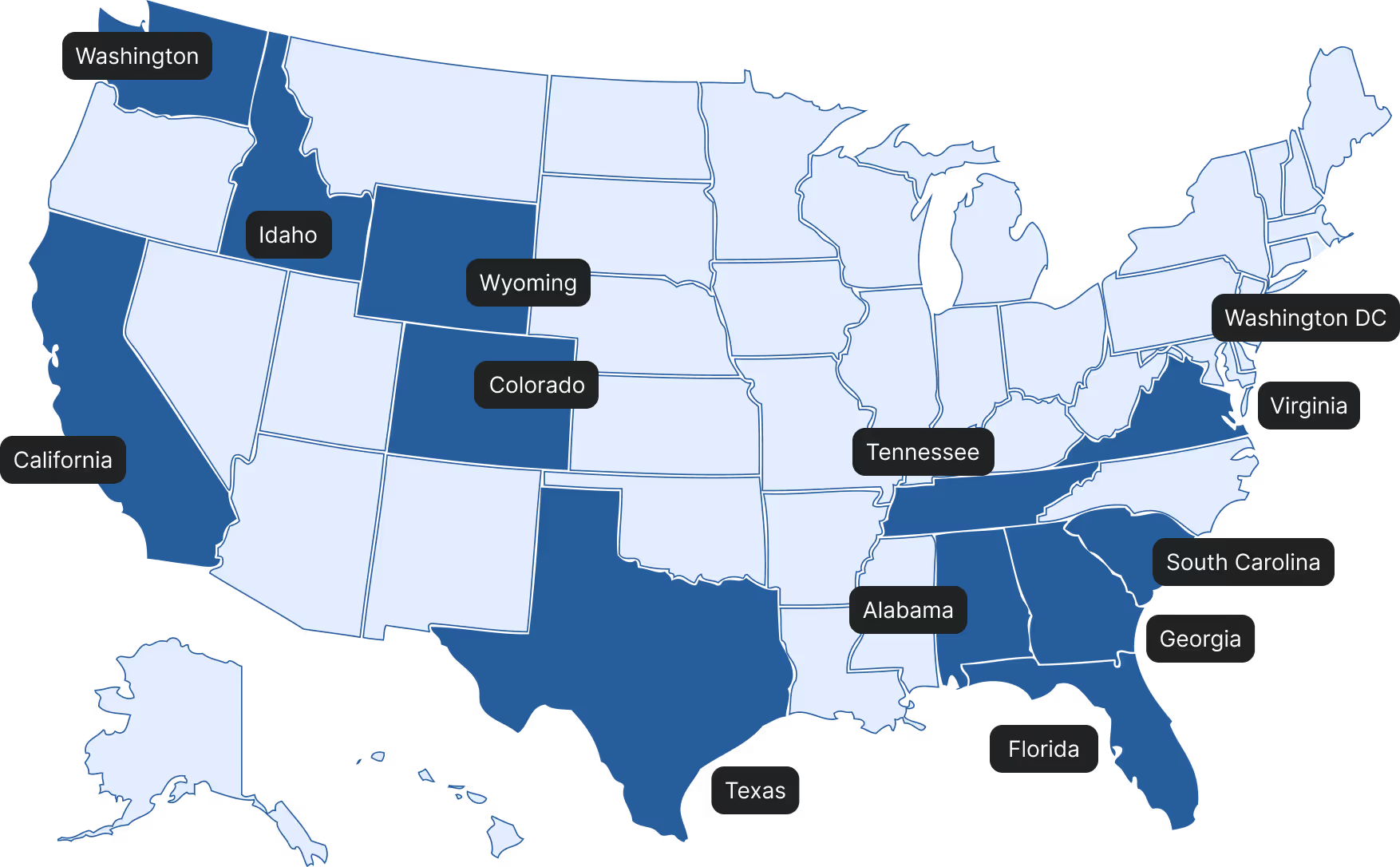
States Where We Do Business

.svg)

.svg)

