.avif)

.avif)
.svg)
VA Tidewater Process California Breakdown: What Happens After the Appraiser Flags a Value Issue
In California’s competitive housing market, appraisal gaps can disrupt VA loan transactions quickly. When a property appears likely to appraise below the contract price, the VA introduces a safeguard known as the va tidewater process. This step gives buyers and agents a chance to respond before the appraisal is finalized.
Understanding what is va tidewater, how the va tidewater appraisal works, and how to navigate the va tidewater process can make the difference between saving a deal and losing it.
What Is VA Tidewater
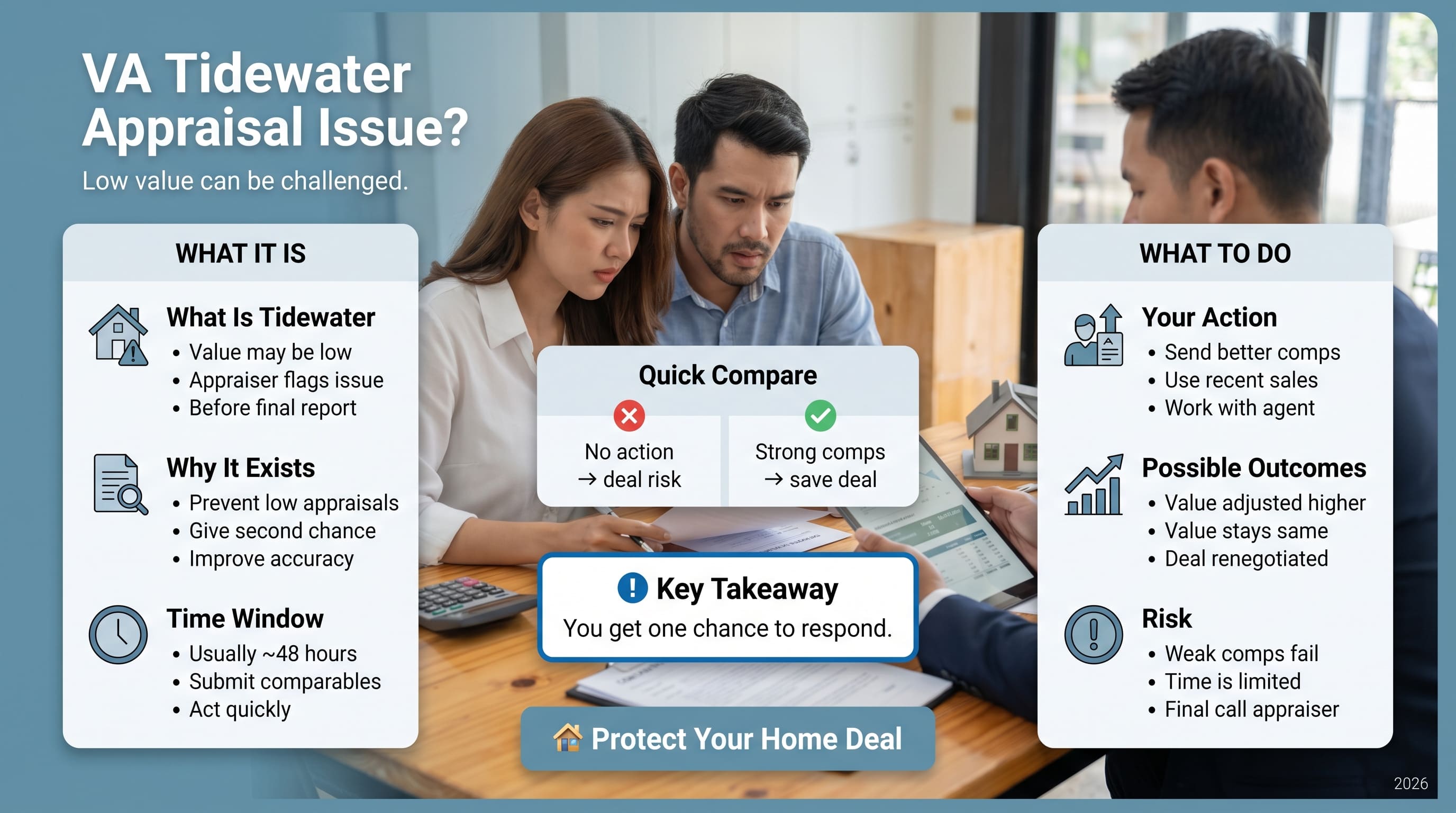
The va tidewater process is triggered when a VA appraiser believes the property value may come in lower than the agreed purchase price.
Instead of immediately issuing a low appraisal, the appraiser notifies the lender. The lender then informs the buyer and real estate agents, giving them a short window to provide additional comparable sales.
This creates a structured opportunity to support the contract value before the appraisal is finalized.
Why VA Tidewater Exists
The purpose of the va tidewater appraisal process is to:
- Reduce unnecessary low appraisals
- Give buyers a fair chance to justify value
- Improve accuracy of comparable data
- Prevent avoidable deal cancellations
In California, where pricing can vary significantly by neighborhood, this process is especially important.
VA Tidewater Process Step by Step
The va tidewater process follows a clear sequence.
Step 1 Appraiser Flags Value Concern
The appraiser determines that the property may not support the contract price.
Step 2 Notification to Lender
The appraiser alerts the lender before completing the report.
Step 3 Buyer and Agent Response Window
The lender gives a limited timeframe, usually 48 hours, to submit additional comparable sales.
Step 4 Review of Submitted Data
The appraiser reviews the new information and adjusts valuation if justified.
Step 5 Final Appraisal Issued
The appraiser completes and submits the final report.
VA Tidewater Guidelines Overview
The va tidewater guidelines ensure fairness and consistency.
Key rules include:
- The process must occur before the appraisal is finalized
- Only relevant and recent comparable sales should be submitted
- Timeframe for response is limited
- Communication must go through the lender
These guidelines prevent delays while maintaining appraisal integrity.
Tidewater vs No Intervention
California Market Context
California’s housing market creates unique challenges for appraisals:
- Rapid price changes
- Limited comparable inventory
- Micro market differences within cities
- High competition
Because of this, the va tidewater process is frequently used to address valuation gaps.
Practical Scenario
A buyer agrees to purchase a home in California for 750000.
Situation
- Appraiser believes value may be lower
- Va tidewater is triggered
Action
- Agent submits three recent comparable sales
- Data supports higher valuation
Outcome
- Appraisal adjusted closer to contract price
- Transaction continues
This shows how the process can protect the deal.
Risk Factors During Tidewater
Understanding these risks helps borrowers respond effectively.
Common Mistakes to Avoid
Borrowers and agents often mishandle the va tidewater appraisal process.
Common issues include:
- Submitting outdated or irrelevant comparables
- Missing the response deadline
- Providing insufficient data
- Assuming the value will automatically increase
Proper preparation improves success rates.
How to Respond Effectively
A structured response is critical during the va tidewater process.
- Use recent and nearby comparable sales
- Focus on similar property features
- Provide clear and relevant data
- Coordinate quickly with the lender and agent
Timely and accurate submissions improve the chances of a favorable outcome.
What Happens If Value Is Still Low
If the appraisal remains below the contract price:
- Buyer may renegotiate with seller
- Buyer may cover the difference
- Transaction may be canceled
Even with va tidewater, the final value depends on supporting data.
Strategic Importance in California
In California, where property values are often high, even small appraisal gaps can affect loan approval.
The va tidewater process provides:
- A second chance before final valuation
- Better alignment between market value and contract price
- Reduced risk of deal failure
This makes it a critical part of VA transactions.
Final Thoughts
The va tidewater process is a valuable safeguard in VA lending. It allows buyers to respond when a property is at risk of being undervalued, helping maintain deal stability.
Understanding what is va tidewater, following va tidewater guidelines, and responding effectively during the va tidewater appraisal stage can significantly improve outcomes in California’s competitive housing market.
This analysis is based on lending experience and transaction patterns observed by Bill Marshall. For structured VA loan support and appraisal guidance in California, Merchants Home Lending provides professional assistance aligned with current lending practices.
FAQs
What is va tidewater
Va tidewater is a process that allows buyers to submit additional data when an appraisal may come in low.
How does va tidewater process work
The appraiser notifies the lender, and the buyer gets time to provide comparable sales before the final appraisal is issued.
What are va tidewater guidelines
They include submitting relevant comparables within a limited timeframe through the lender.
Can va tidewater increase appraisal value
Yes, if strong supporting data is provided, the appraiser may adjust the value.
What happens if va tidewater does not work
The appraisal is finalized, and the buyer may need to renegotiate or cover the difference.
Check VA Rates Now
Take a first step towards your dream home

Free & non binding
No documents required
No impact on credit score
No hidden costs

.svg)

.svg)

